
Back to Articles
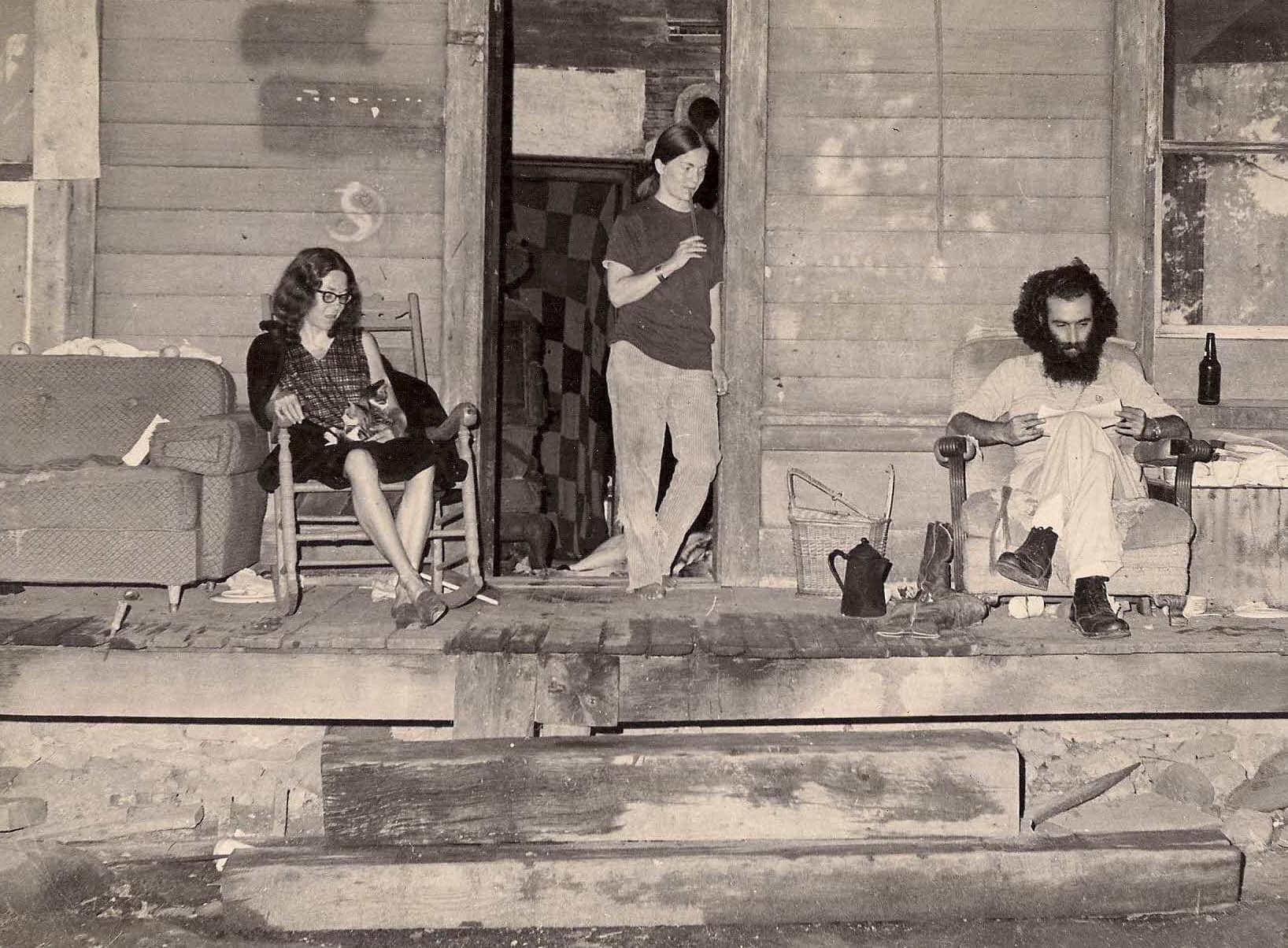
On the front porch of the Oz Commune
Many think of the 1960s in America as a time of peace, love, and understanding. But, during the time the country was nearing the end of the decade, turmoil crisscrossed the United States. By 1968, communist forces in South Vietnam had launched the Tet offensive, both Martin Luther King Jr. and Bobby Kennedy had been assassinated, and riots broke out across the country. It was during this time of crisis that a group of idealistic young Californians found themselves in Crawford County looking to create a refuge for themselves aimed at communal living.
Arrival of the group was first reported in the Meadville Tribune at the beginning of June 1968. Citing themselves as members of The Anthropodeic Church, George Hurd, Dan Pierce, and Josh [no last name given] disclosed their plans in an interview with the newspaper detailing their hope to create a community for approximately 40 people on donated land in Harmonsburg. Hurd explained that the group didn’t consider themselves hippies instead describing themselves as a “spiritual” group. “We are part of a spiritual movement that is based on the universal brotherhood of man, quite similar to early Christian communities,” Hurd said, adding, “We are a non-violent, peace-loving group.”
The plan was to renovate a property on Inlet Road, two miles south of Harmonsburg, donated by William Close. In June of 1968, twelve of the group’s members had already arrived to begin work repairing a two-story frame house on the property. Future plans involved erecting separate dwellings for married couples with children. Tools and seeds had been borrowed from a neighboring farmer. Hurd said the group planned to grow their own food and work part-time when needed to cover necessities.
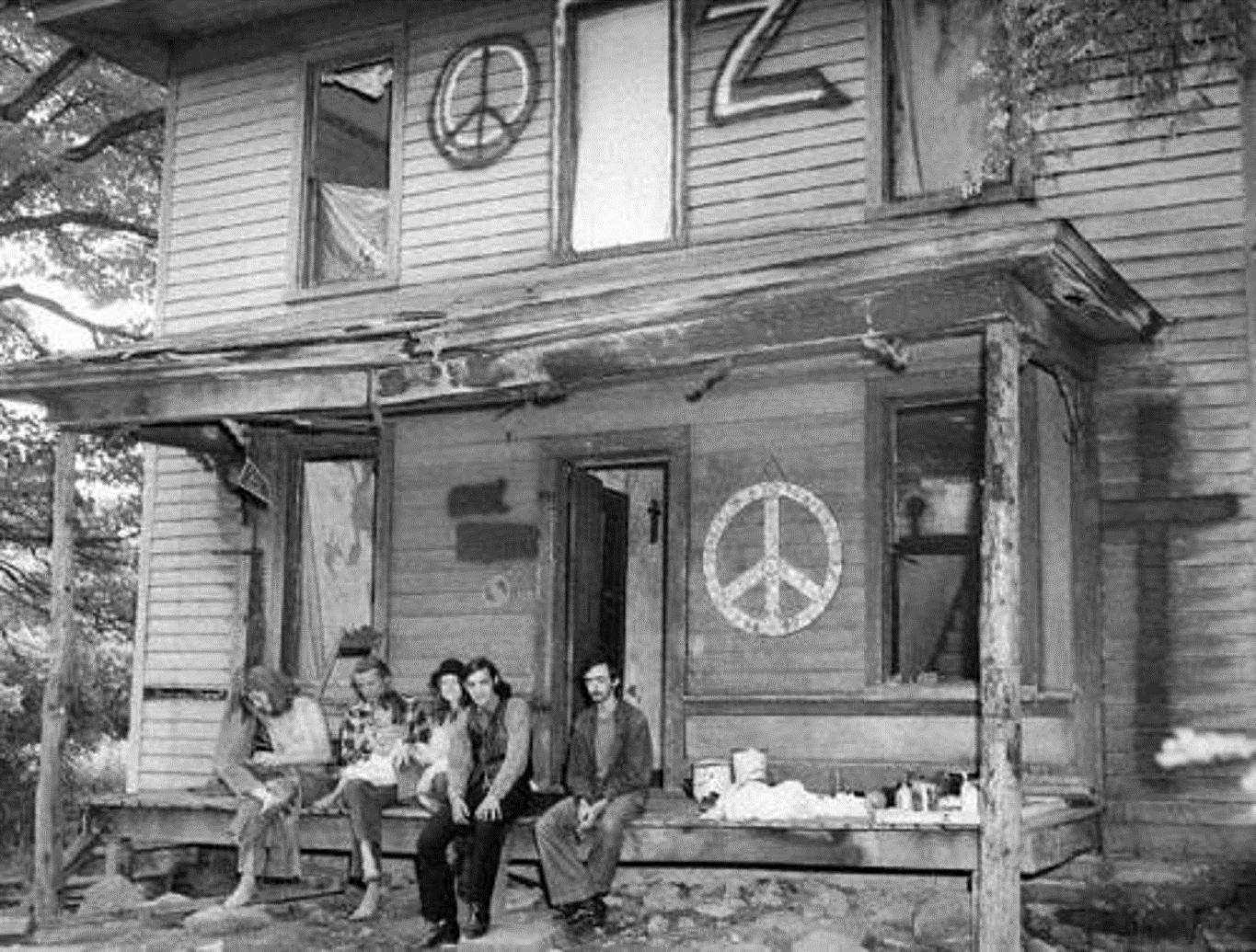
Oz Commune
Curiosity in town was piqued. Many local residents were making the trip out to the “hippie camp” as it was referred to colloquially to take a look. However, enthusiasm over the new neighbors was soon squashed when health officials began urging the public to stay away from the property. It was only two weeks after the arrival of the “church” when outlets began reporting that a case of infectious hepatitis had been diagnosed among members. Dr. Lewis D. Williams, regional director of the State Health Department, divulged to the Tribune in late June that a male member had been admitted to Greenville Hospital with infectious hepatitis, “a liver disease that quite often is fatal.” Fellow members of the commune were to be treated with gamma globulin in order to prevent the spread of infection. Officials believed the infection was caused by poor living conditions on the commune including a “pit-type latrine used for toilet facilities, an unprotected water well downgrade from the latrine, no effort made to boil the water before drinking it, no place to bathe besides a creek, no windows in the house, and no adequate means of cooking food and washing dishes and utensils.”
State police were called in to help keep traffic away from the colony as officials worked with the group to stop the outbreak. But public opinion of the group soon plummeted. More disparaging articles shortly followed and dozens of citizens of Meadville were speaking out against the church and its members. At a town meeting in early July, more than 200 people including 25 members of the commune and state officials met to discuss the growing unease between the colony and the members of the public. The Meadville Tribune reported that most questions were answered by State District Attorney Paul D. Shafer and Dr. Williams. Shafer, who told those gathered that the “camp” was continually under investigation and so far no evidence of illegal activity had been uncovered. He did, however, make sure that business owners, especially those of food establishments, knew that they were under no obligation to serve members of the commune. “You don’t have to let dirty, filthy, or unsanitary people in your places of business,” Shaffer is quoted as saying. When one citizen asked about the legality of having “100 men” go to the Inlet Road property to “[run] them off,” Shaffer urged caution, saying that would be “talking riot or lynch, which we don’t want here.” At that time, in July 1968, there was no legal recourse the municipality could take against the group, despite growing concern over the living conditions on the property. State officials did not mince words or try to guard their unfavorable opinions when it came to the group. Shafer was quoted as saying that the group should “clean up their establishment and their lives for their own good,” suggesting they relocate to a climate better situated for their primitive living situation. Dr. Williams added, “They are a menace to the people in the township as long as people go to the farm and mingle with them. There aren’t enough State Police in the state to keep the dumbbells off the property.”
Public outrage grew in mid-July and reports of an “inquiry” into the so-called “hippie community” was promised by state officials. Soon, a building permit for work on the property was revoked by Crawford County Commissioners. The commissioners claimed that there was no way the building could be fit for habitation and that it would not meet the standards of other buildings in the area. De facto group leader George Hurd was quoted in the Meadville Tribune on July 12, saying that he planned to construct a parsonage on the property out of used lumber for $300. Officials scoffed at the plan, calling it impossible. In this same edition it was revealed that Summit Township supervisors had long had their eye on the property for use as a landfill dump. Tensions between the group and officials continued to rise. When another case of hepatitis was linked to the group in late July, officials sprang into further action. August marked the beginning of the end for the members of the Anthropodeic Church. The community made front page news on August 17, when officials raided the property arresting 36 people on charges of contributing to the delinquency of minors and maintaining a disorderly house. Two children and two juveniles were placed into system care. Reports in the Meadville Tribune credit the “hippies” with singing “America” and “We All Live in a Yellow Submarine” during their transport to the substation. All those arrested declined to waive a preliminary hearing and in lieu of bail were remanded to the county jail. Officials worked to search the property for illegal materials. After being held over the weekend, eight were released after posting the $500 bail. According to the sheriff, bail was posted by the members’ parents. The 36 were ordered to appear before Meadville Alderman Donald W. Ladmer on August 26. District Attorney Paul D. Shafer told reporters he planned to petition the court for an injunction to have the property declared a public nuisance, which would force its occupants to vacate. A temporary injunction was issued, as reported by the Meadville Tribune on August 20. A hearing to determine if the injunction would be made permanent was to take place on August 28. In the meantime, Hurd continued to work to raise money to have more members of his “church” released from jail.
Trouble for the group continued when four members were sentenced to a separate vagrancy charge stemming from an early August arrest. They were sentenced to 30 days in jail. An appeal was filed. Seven of those arrested on the morals charges were appointed counsel by the courts after having declared themselves without means to hire their own. The attorneys would represent the defendants at a hearing scheduled to take place in the auditorium of St. Agatha’s High School. However, the hearing was continued because only those seven were able to obtain counsel. The hearing was rescheduled for September 6 so that the other 27 defendants would have adequate time to acquire counsel.
Soon an agreement was reached between the Commonwealth and the community, and the charges were dismissed. The group was ordered to vacate the Inlet Road property within two weeks, and they agreed to an injunction barring them from ever using the Harmonsburg property for any purpose. It was rumored that the group was contemplating a new site in Maryland, but there was no evidence that those rumors had any credence.
Per the agreement with the state, though the members had to immediately leave the Inlet Road farm, they were allowed to stay in the area as individuals. Many planned to scatter around the country until they could establish a new community somewhere else. Reported leader George Hurd told the Meadville Tribune he hoped to stay in the area in order to establish “a coffee house-meditation center and metaphysical library with sleeping quarters.” It was also rumored that a number of the members had tried to find gainful employment in the Meadville area, even going so far as to cut their hair and shave their beards in order to fit in. However, Hurd was quoted as saying “This just isn’t true.” He went on, “We all tried to find jobs, but no one in Meadville wanted to hire us.” By September 21, all of the “hippies” were gone.
So was the end of an era for a peaceful commune in Crawford County. In early 1969 the New York Times Magazine ran an article entitled “Life and Death of a Commune Called Oz,” describing the events surrounding the group and its members during the summer of 1968 in Crawford County. It was in this article that it was reported that the group referred to their home as Oz. If you visit the site today, the property has been overtaken by nature, returning once more to woods, and now, perhaps, closer to the fabled Land of Oz than during the troubled times it was occupied by its once infamous inhabitants. Sadly, the community and the inhabitants who tried to call it home, never became the peaceful neighbors that each other hoped for.

References
Meadville Tribune
Newspaper Vertical Files at the Crawford County Historical Society
New York Times
About the Author
Sarah Wolford Youngblood is a local educator who is interested in the history of her community as well as the arts, theater, and nonprofit sector throughout Crawford County. She lives in Meadville with her family.
Sign Up for Our Newsletter
Get the latest Crawford County Historical Society news and information delivered right to your inbox.
"*" indicates required fields