

Back to Articles
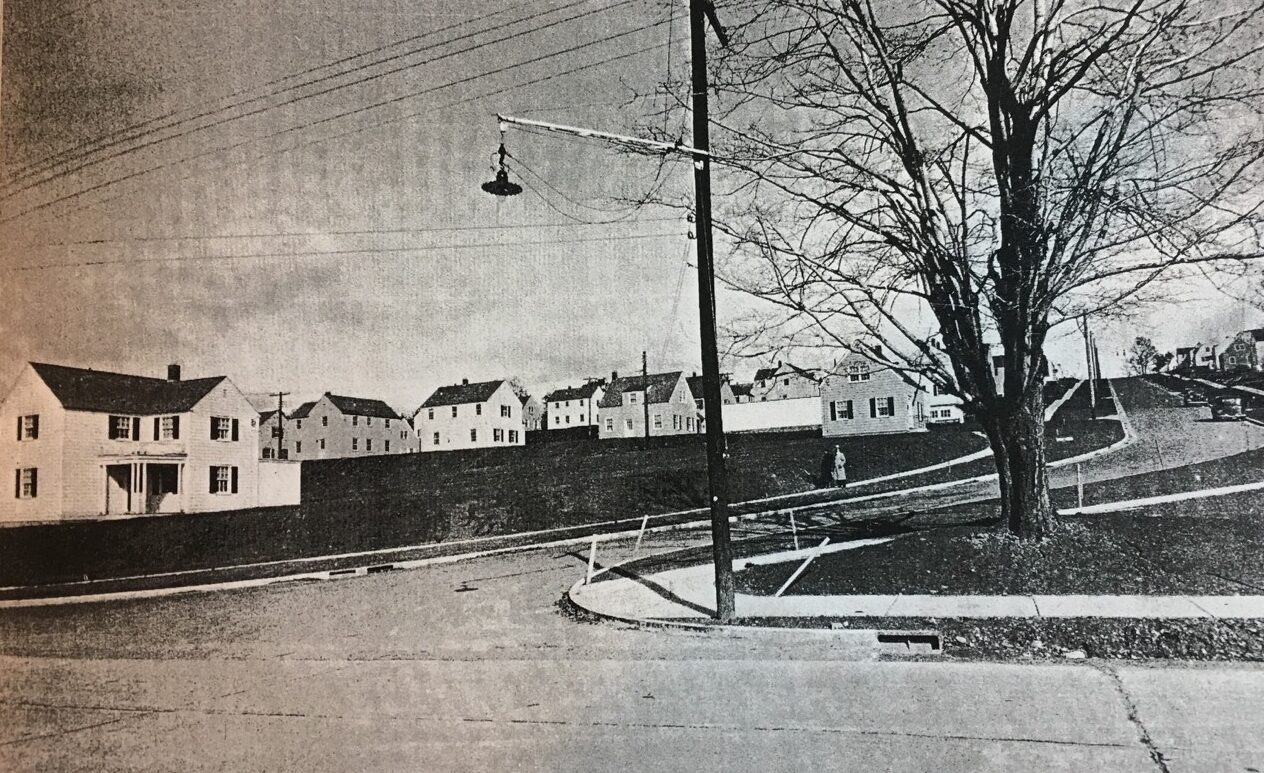
Hillcrest shortly after opening in 1936
The homes at Hillcrest in Meadville, Pennsylvania, have become such a part of the fabric of the community that one could almost take them for granted. They seem to have always been there. Like a game of “Six Degrees of Kevin Bacon,” everyone who lives, or has ever lived, in Meadville is likely to at some point live at Hillcrest, or know someone that has lived at Hillcrest. Hillcrest is not glamorous; however, it is a fine starter home for many of Meadville’s families, and a livelong home for some. But for those interested in the history of Meadville, Hillcrest speaks volumes about the city’s social, cultural, and economic history.
All of Hillcrest Housing Development was constructed in 1936, which is impressive, but not as impressive as the two years of work the Meadville Chamber of Commerce put in to make the development happen. Had they not, Meadville would be a very different town today.
Meadville, The Depressionless Town with a Housing Crisis
Even at the height of the United States’ Great Depression (1929-1939), industry in Meadville was booming. This is owed to two manufacturers: Hookless Fastener Co. (later Talon Zipper Inc.) and Viscose Co. (later American Viscose). In 1913, the Hookless Fastener Co. found Meadville an attractive place to begin production of its newest innovation, the slide fastener. And in 1928 Viscose Co. announced it would open a new acetate yarn manufacturing plant in Meadville. The success of these, and Meadville’s many manufacturers, led to an increase in employment even during the economic crisis of the Great Depression. In Meadville in the year 1929, there were 3,939 persons employed in a local industry. By 1934, the employment numbers had risen to 5,935 persons. In contrast, the average unemployment rate in the United States during the same time ranged from 15 to 25 percent.
This incredible increase in employment led to a subsequent increase in population for Meadville, and a housing problem. In the years between 1900 and 1930, the population had increased an average of 2,135 persons every ten years. In 1930, the total population of Meadville was 16,698, with an additional 10,000 living within a five-mile radius. The steady growth left Meadville with a low rate of vacant housing, found to be at only .265 percent in 1934. In comparison, nearby Erie, Pennsylvania’s vacancy rate for the same time-period was 10.4 percent.
While these statistics might seem like a good thing, especially when the country was in an economic crisis, for Meadville it was a threat to the livelihood of the city. The lack of adequate housing was a detriment to further growth because Talon and Viscose were both considering expansion. Talon planned to add 1,200 employees to the current payroll of 3,000, but difficulties in housing its workers had forced the company to consider other locations for its proposed plant expansions. And with only 800 workers, American Viscose was anxious to hire and fulfill its full employment capacity of 1,800, which it had created through its recent plant expansion.
Meadville Chamber of Commerce to the Rescue
As early as February 1934, the Meadville Chamber of Commerce recognized the city had an acute housing crisis, and that if a solution was not found, the two largest employers in the city might move to another location. The Chamber decided it would pursue ways to finance a large-scale housing development. They were inspired by the federal government’s New Deal programs offering loans for housing. In addition, the Chamber was likely influenced by recent housing developments in Cleveland and Philadelphia.
Throughout April and into May 1934, the Chamber of Commerce surveyed local manufacturing plants regarding how many each employed, where their employees lived, what the employee’s housing needs were, and how much employees would be willing to pay for renting or purchasing homes. According to the May 11, 1934 minutes of a special meeting of the Chamber of Commerce, it was decided to proceed with the formation of a committee to begin a housing development in Meadville.
The Federal Housing Authority Makes Meadville a First
On June 27, 1934, the National Housing Act was approved. This Act created the Federal Housing Administration (FHA), a mortgage insuring provision. The Meadville Chamber of Commerce saw this as new way to finance their proposed housing project, and they decided to request a meeting with the FHA’s Large-scale Housing Division. The FHA asked for preliminary information regarding the housing need within the city, the capital structure of the proposed housing corporation, and the general layout of the plan and construction. Because the Chamber of Commerce had already been in the process of gathering this information, they were able to respond quickly. Upon obtaining the information, a real-estate analyst was sent to investigate. Following his examination, the Administration advised the Meadville Committee that the site and plan were acceptable, and that a formal application could be made. The FHA also advised that a private corporation be formed to own and operate the project, making it easier to obtain private funding once the announcement was made of FHA acceptability.
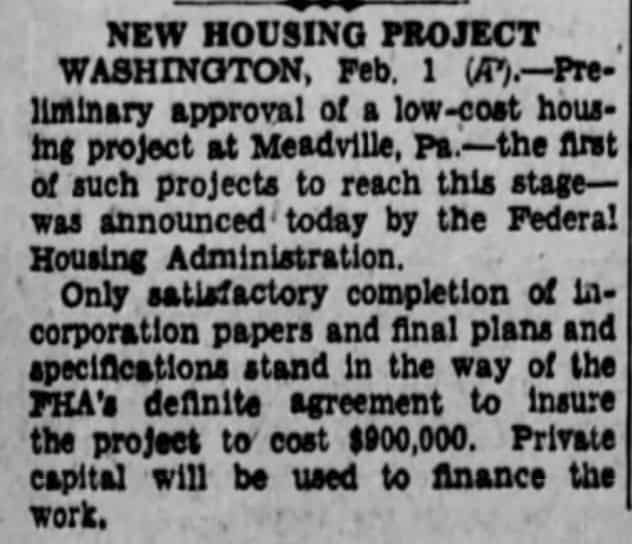
Image of article from Scranton Republican February 1, 1935
Newspaper articles dated February 1, 1935, announced the approval of the Meadville plan. This was the first large-scale housing development the FHA ever approved in the United States. While there is no disputing the approval date or the fact that Meadville’s project was the first, outside of Meadville, Hillcrest does not hold this title. Colonial Village in Arlington, Virginia, was approved by the FHA on February 21, 1935. However, the Colonial Village proposal had more substantial organization for its undertaking, and was able to get its mortgage financing faster than Meadville. In 1935, Colonial Village was the first completed large-scale FHA project in the United States. It is listed in the National Register of Historic Places as the FHA’s first large-scale housing project, although Hillcrest received its approval before the Virginia developer.
Meadville Citizens Rally Around Hillcrest Project
With the backing of the Meadville Chamber of Commerce, the Meadville Housing Corporation (MHC) was chartered on March 13, 1935. The FHA had agreed to insure an $800,000 mortgage over thirty years. MHC posted notices in local newspapers advertising stock certificates to privately finance what the mortgage would not cover. Stock was purchased by residents, and large and small businesses. Several local industries contributed more than $10,000, the largest amount coming from Talon, Inc. A total of ninety-seven stock certificates were issued, large and small. Using only the financial support of the local community, a total of $212,000 was raised. This is equivalent to $3,820,240 in 2017 dollars! The citizenry of Meadville knew how important the project was to the community to build this housing development, and they put their dollars behind the project.
By the beginning of June 1935, the Pennsylvania Secretary of Labor and Industry had authorized the Pennsylvania State Workman’s Insurance Fund to invest the $800,000 necessary to start the project. The total value of Hillcrest Housing Development was $1,012,000, the first project of its kind in the state of Pennsylvania. In press releases across the country, Meadville’s housing project was lauded as an innovative solution to housing issues being faced by many municipalities. Because of the Chamber of Commerce’s close involvement in getting the project started, they also received inquiries from chamber members and housing committees from other cities about how to get their own projects financed by the FHA. In the true spirit of community promotion, M.W. Williams, Chamber of Commerce Managing Secretary, would always respond that it was too complicated to explain in a letter, and that the hopeful researcher should come to Meadville to see it in person.
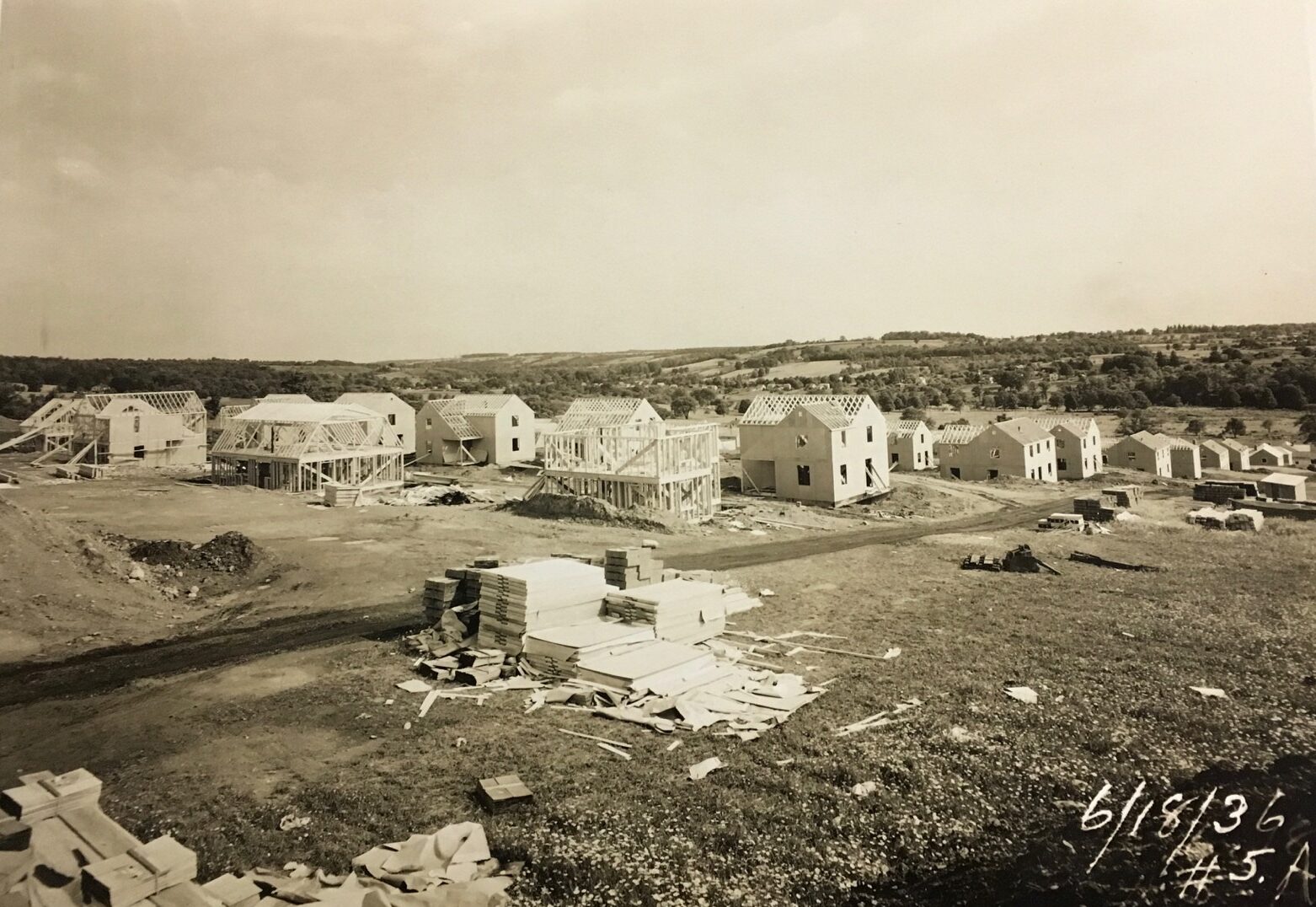
Hillcrest during construction in a photo dated June 18, 1936. Photo courtesy of Crawford County Historical Society
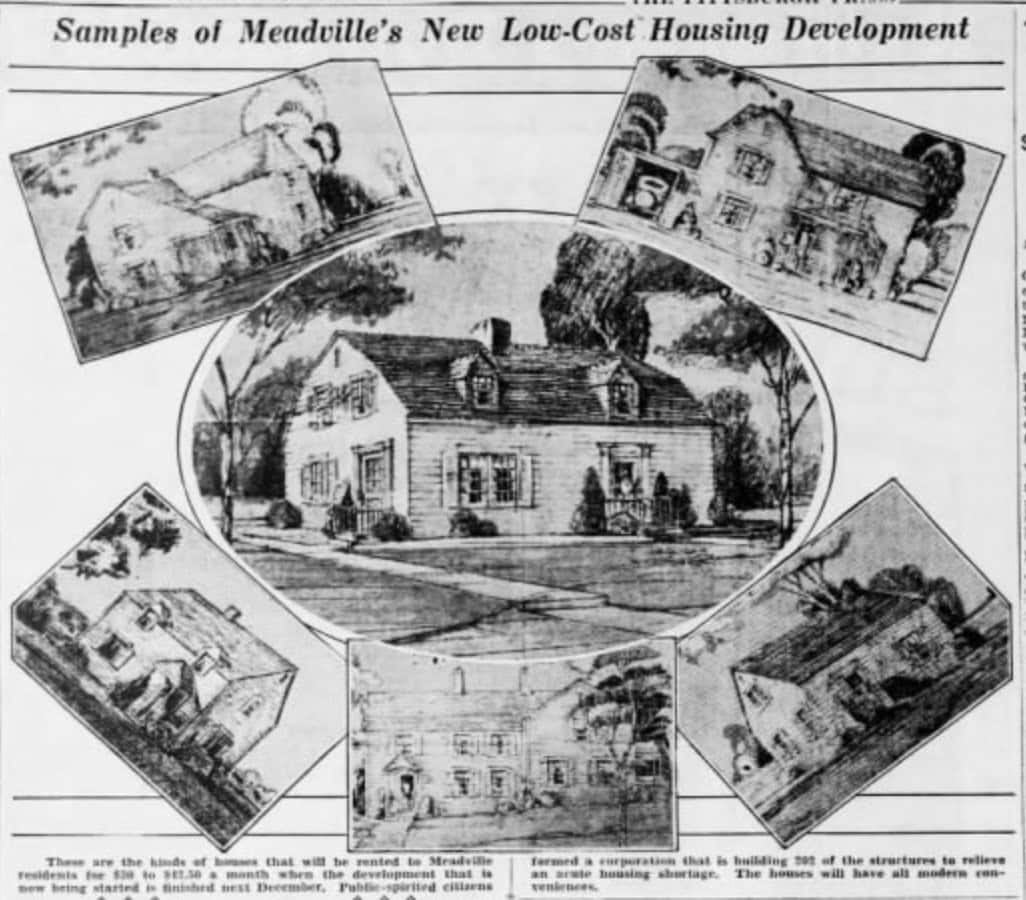
Article from the Pittsburgh Press, May 18, 1936 showing the sketches of the homes waiting to be built in Meadville
Construction Begins
With the financing in place, ground for Hillcrest was broken April 4, 1936. Architects E.A. and E.S. Phillips of Meadville designed the homes and the plan for the development. Homes were designed to meet the specifications of the FHAs minimum housing standards of “a maximum accommodation within a minimum of means.” Hillcrest’s homes were also planned and built in keeping with the wants and needs identified in the previous year by the industrial housing surveys. The goal was to have homes which would ensure Meadville could attract and retain the incoming skilled labor necessary for the growth of local industries, while keeping the potential tax-base within the city limits. The architects and labor used all came from the Meadville area. The first tenants took occupancy October 3, 1936.
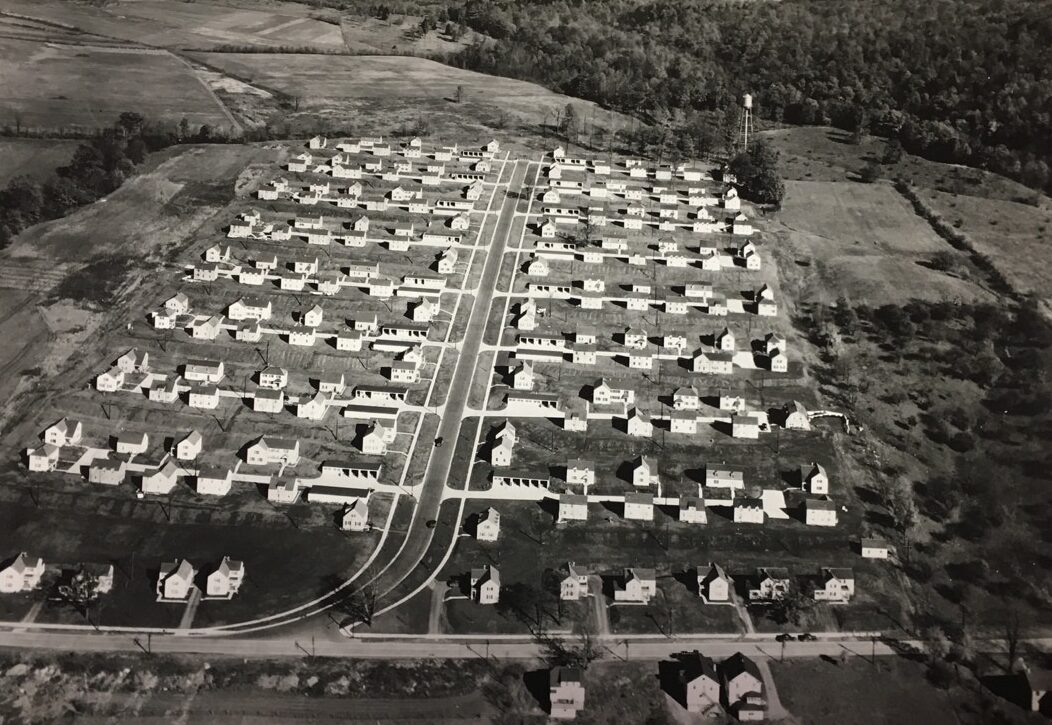
Aerial view of the finished housing project. Photo courtesy of the Crawford County Historical Society
The Homes at Hillcrest Housing Development
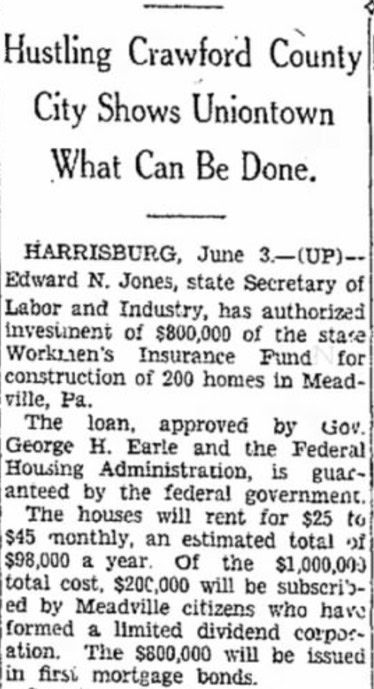
As this article’s headline shows, cities all over the country were watching Meadville’s success with some envy
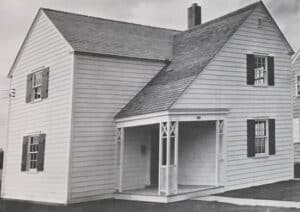
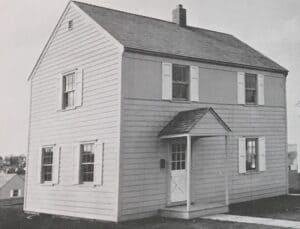
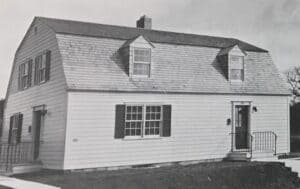
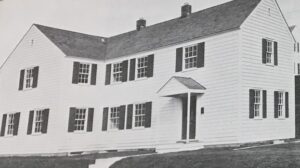
The eight house designs were built with the future tenant in mind. The homes were placed in cul-de-sac streets to encourage safety for families with children. Each home was intentionally alternated to give the appearance of variety on each street. Extra money made available was allotted for window shades and wallpaper chosen by the new tenant. Land was set aside on the property for public use, and a park was created for the development with a playground, tennis courts, and basketball courts. Batteries of garages were made available at the end of each street, except for the homes on Washington Street which had garages attached. One hundred fifty of the homes were heated with new gas furnaces, however if a tenant wanted a coal furnace, the company would remove the gas furnace at any time in the first two years of occupancy. Hillcrest was meant to be a jewel for the industrial workers living in Meadville.
The Meadville Housing Corporation’s project was a trailblazer for the rest of the country, hard hit by the effects of the Great Depression. The architect E.S. Philips went on to design another FHA housing project of modern homes in Titusville, Pennsylvania, during 1936. The Uniontown, Pennsylvania, Evening Standard gave their article about Hillcrest the subtitle, “Hustling Crawford County City Shows Uniontown What Can Be Done.” In December 1937, Shippensburg, Pennsylvania, held up the Hillcrest development as an example of how to combat their own housing crisis stating, “Meadville has a plan that is working well. It is not copyrighted and probably could be obtained with good wishes from the Meadville people.” The Hillcrest Housing Development was known across the country, and for good reason, Meadville’s project was an early adopter of an entirely new way to think about worker’s housing.
Hillcrest is not just a neighborhood of homes. It is a place that tells an important story of the City of Meadville. This story begins with Meadville’s astounding good fortune to be considered a “depressionless” city during a time the rest of the country was experiencing exceptional economic losses. The story continues with amazing foresight on the part of the Chamber of Commerce to recognize a housing problem, realize the impact of ignoring it, and find an innovative solution in the FHA that most cities had not even begun to understand. And not to be underestimated is the way the people of Meadville came together, lending the project their financial resources, even when the national economy was unstable. The end of the story has not been written yet, as Hillcrest Housing Development continues to be a housing solution for the people of Meadville, offering reasonably priced rental housing in a safe, clean neighborhood.
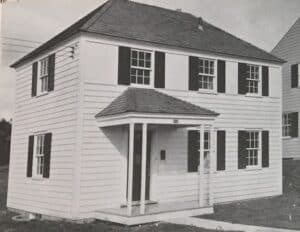
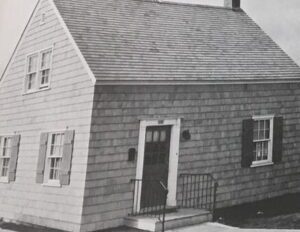
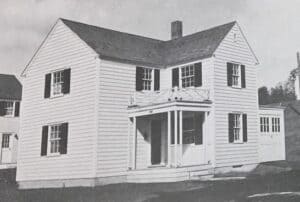
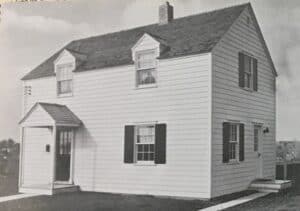
Below, all eight of the Hillcrest homes as they were when originally built. Other than routine maintenance and updates, very little has changed in the intervening eighty-one years. All photos courtesy of the Crawford County Historical Society.

References
Published Works:
Ring, Gustave. “Large-Scale Housing as a Business.” Insured Mortgage Portfolio (June 1937): 5- 7, 22-24.
Roess, Martin J. Jr. “Meadville Solves a Housing Problem.” Insured Mortgage Portfolio (September 1936): 14-16.
Taylor, Carolyn M. “Hillcrest Was a First in the Nation.” Bicentennial Edition of the Meadville Tribune: May 1988.
Yoset, Jack. “Commerce, Industry Has a Long, Proud Local History.” Bicentennial Edition of the Meadville Tribune: May 1988.
Newpapers:
“The Housing Problem.” News-Chronicle (Shippensburg, Pennsylvania) December 24, 1937.
“Meadville To Build 200 Homes With State’s Cash.” Evening Standard (Uniontown, Pennsylvania) June 3, 1935.
“Meadville Will Build 200 Houses with Public Cash.” Pittston Gazette (Pittston, Pennsylvania) June 3, 1935.
“Name Officers, Meadville FHA Housing Program.” Record-Argus (Greenville, Pennsylvania) March 20, 1935.
“New Housing Project, Washington.” Scranton Republican (Scranton, Pennsylvania) February 2, 1935.
About the Author
Samantha Travis is the deputy director of the Crawford County Planning Office. She holds a Masters Degree in Historic Preservation from Goucher College and lives in Meadville, Pennsylvania.
Sign Up for Our Newsletter
Get the latest Crawford County Historical Society news and information delivered right to your inbox.
"*" indicates required fields