
Back to Articles
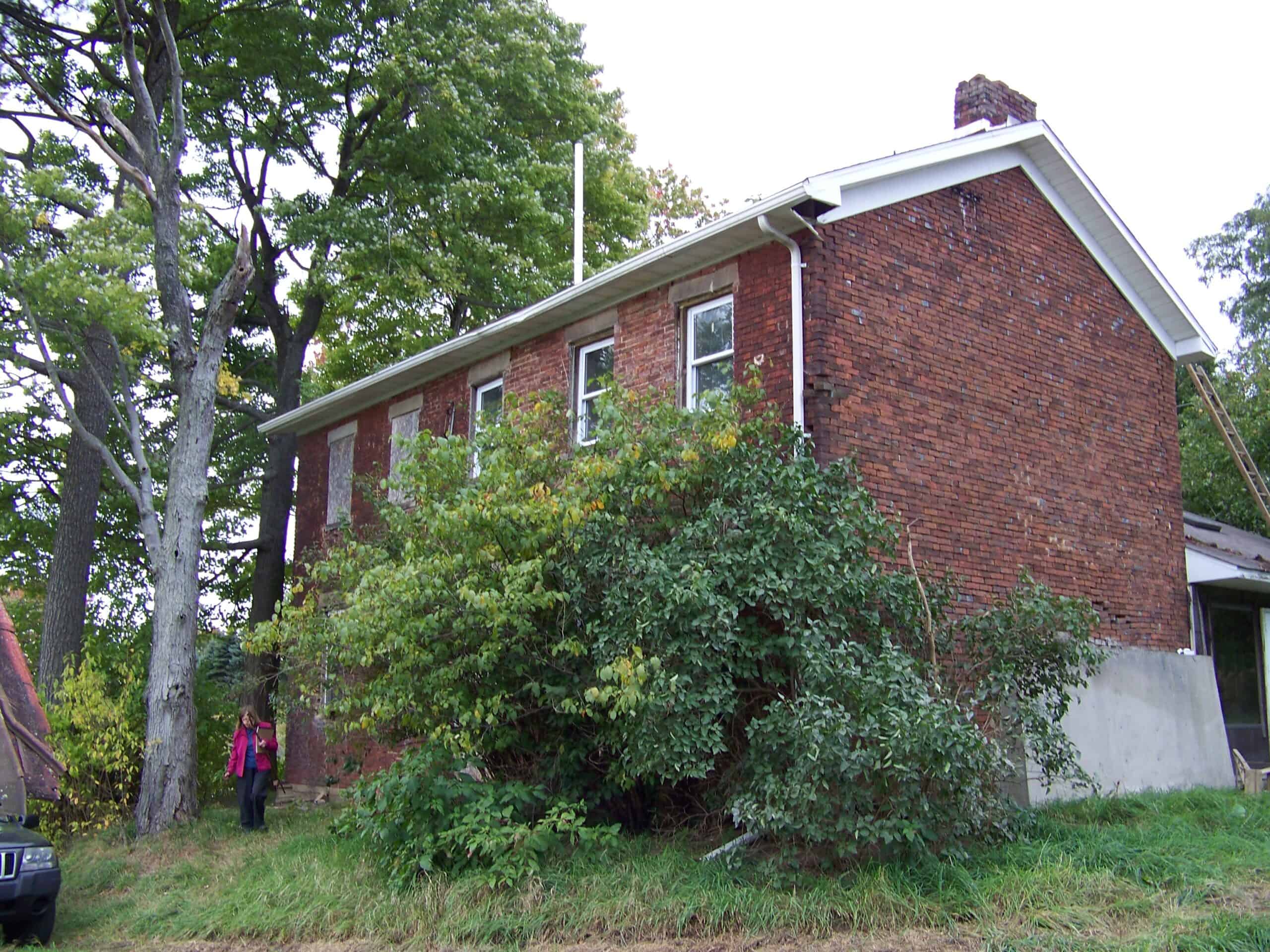
The David Nelson homestead, built in 1820, was demolished on 22 Nov. 2016. It was two stories tall, built of brick with a frame rear wing, and stood at 2693 State Road in Fairfield Township, several miles west of Cochranton. The Nelsons had carved the date “1820” onto the bricks under a front window and those were salvaged by the Dennis family, who sold the farm earlier in the year.
Its builder, David Nelson (ca. 1776-1848), was a pioneer of the Cochranton area. He made a start at clearing the land as early as 1801, though he did not receive the deed for his 450 acres from the Commonwealth of Pennsylvania until it was fully paid off in 1830. Nelson and his wife, Jane Milligan (1776-1869) had at least eight children, and are both buried in the Mumford Chapel Cemetery.
The house was on the east side of the road, and faced south, toward a drive which led to the barn, springhouse and other outbuildings. The main portion was built in what could be called the Federal style, but was extremely plain, with simple stone door caps, window sills and caps. It was probably the oldest surviving brick building in Crawford County, and was of moderate size—24′ x 40′–though that was large for its day. Unfortunately, its construction was the cause of its demise: it looked like clay was used for mortar between the bricks, and over the years it had completely washed away, leaving the outer layer of the wall (which was 3 bricks thick) stacked but almost completely loose, and portions of it had sagged dangerously. Restoration would have been ruinously expensive, requiring a complete unstacking and rebuilding of the outside walls.
The house had been sold out of the Nelson family in the 1880s, and was owned by the family of Andrew and Helen Dynes (their name long since changed to “Dennis”) since 1931. The new owners, Ernst Farms, LLC, decided to remove the buildings as a safety measure, but generously gave permission to Historical Society members and former board members, Bill Moore and Annette Lynch, to measure and photograph it, and that was done in October of 2016. They submitted this article in 2017 and it was recently discovered in our files unpublished until now.
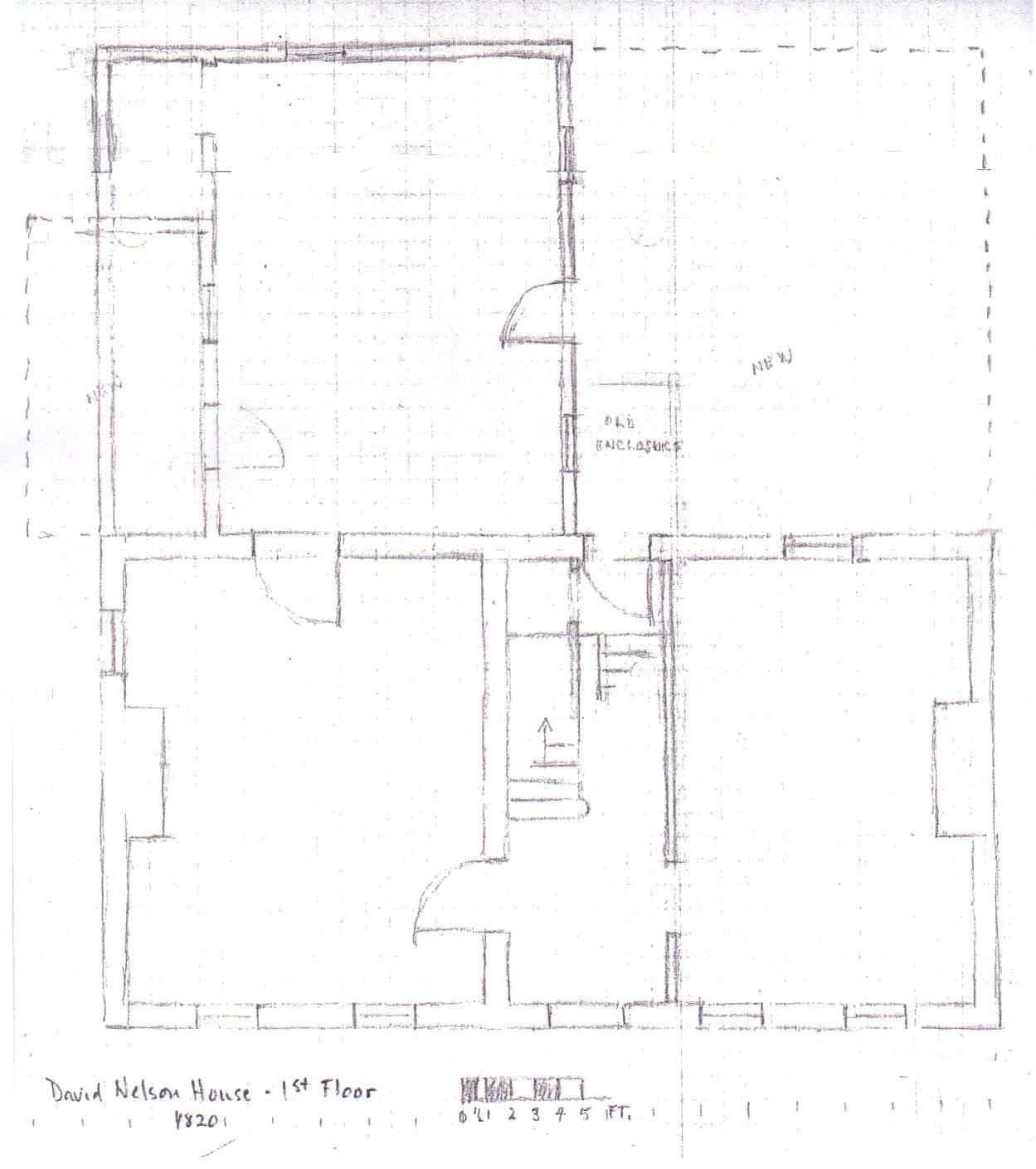
Like many old houses, it had its share of surprises. On the ground floor there was a large parlor on the west end, and its four walls were all brick and a foot thick. There was a chimney—it probably had an open fireplace once, but it was now closed and had no mantel—a window on the west, and two on the south front. There was a door from the kitchen on the north and another into the hallway on the east wall, and all had simple wooden frames about 4” wide.
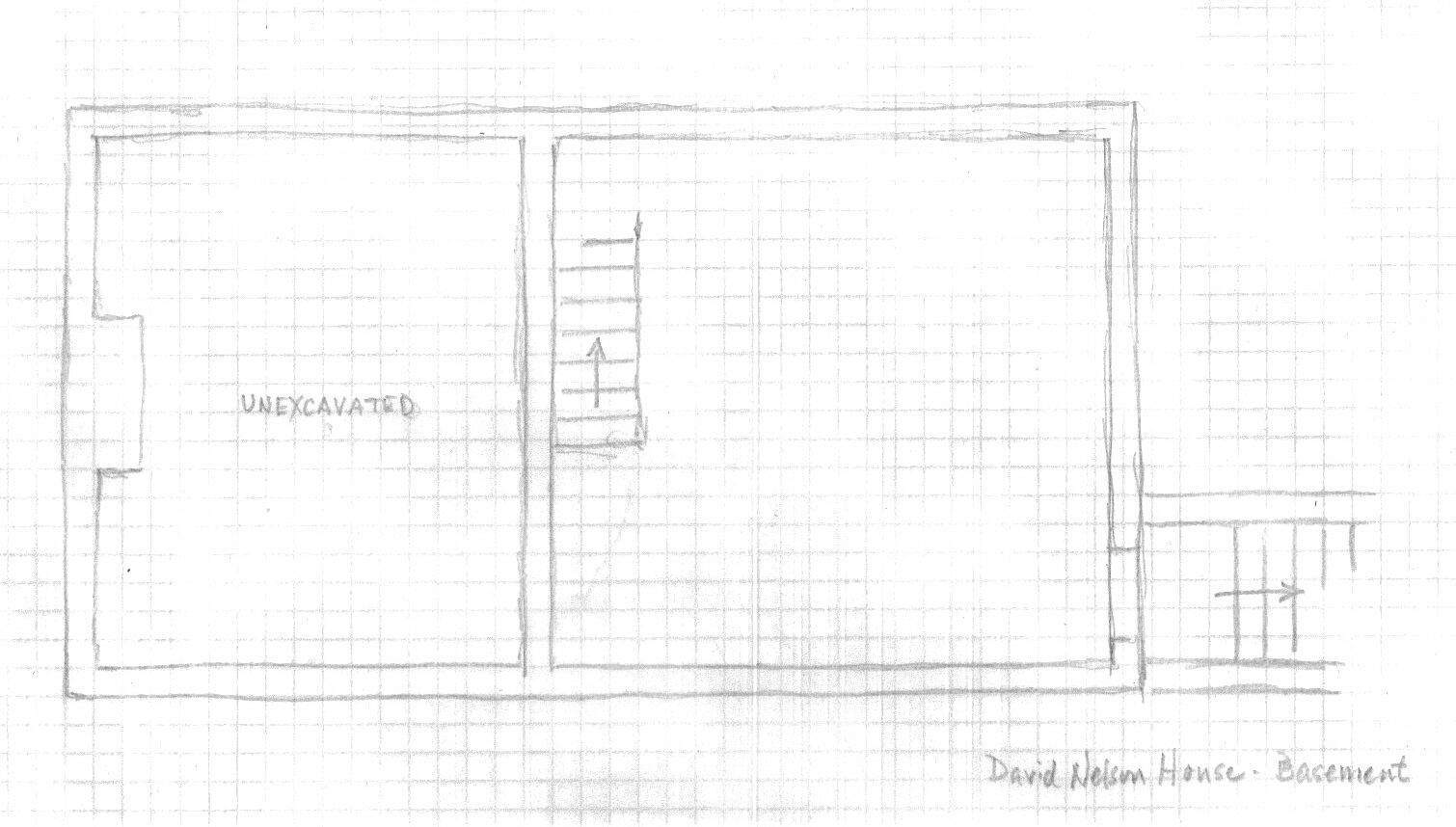
Basement Drawing – David Nelson House
The first surprise was that the cellar did not extend under the parlor, and its foundation was made of flat stones about 2′ long and 4” thick. The second surprise was that the brick partition between the parlor and the front hall did not rise above the first floor: the partition on the second floor was plank and only 6” thick.
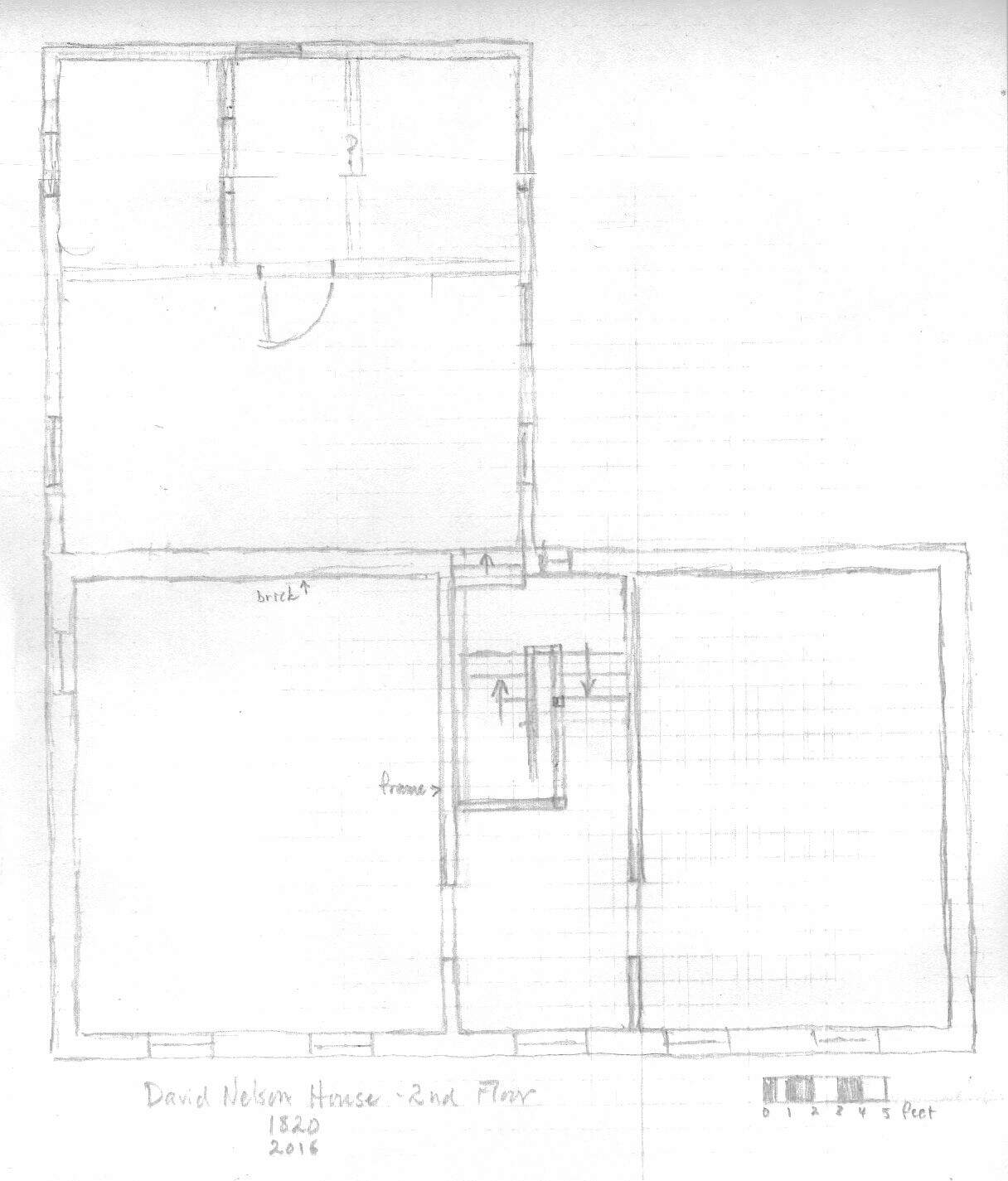
Second Floor Drawing – David Nelson House
On the other side of the hall there was a slightly smaller room, and there were just two rooms and a hall the same size above them on the second floor. The cellar was reached by a stairway under the main stairs in the hall, and only extended under the hall and the east room, and it also had an outside exit and steps on its east wall. The hall stairs were outstanding, with turned posts at the ends and corners, and a sinuous walnut banister, continuous from top to bottom.
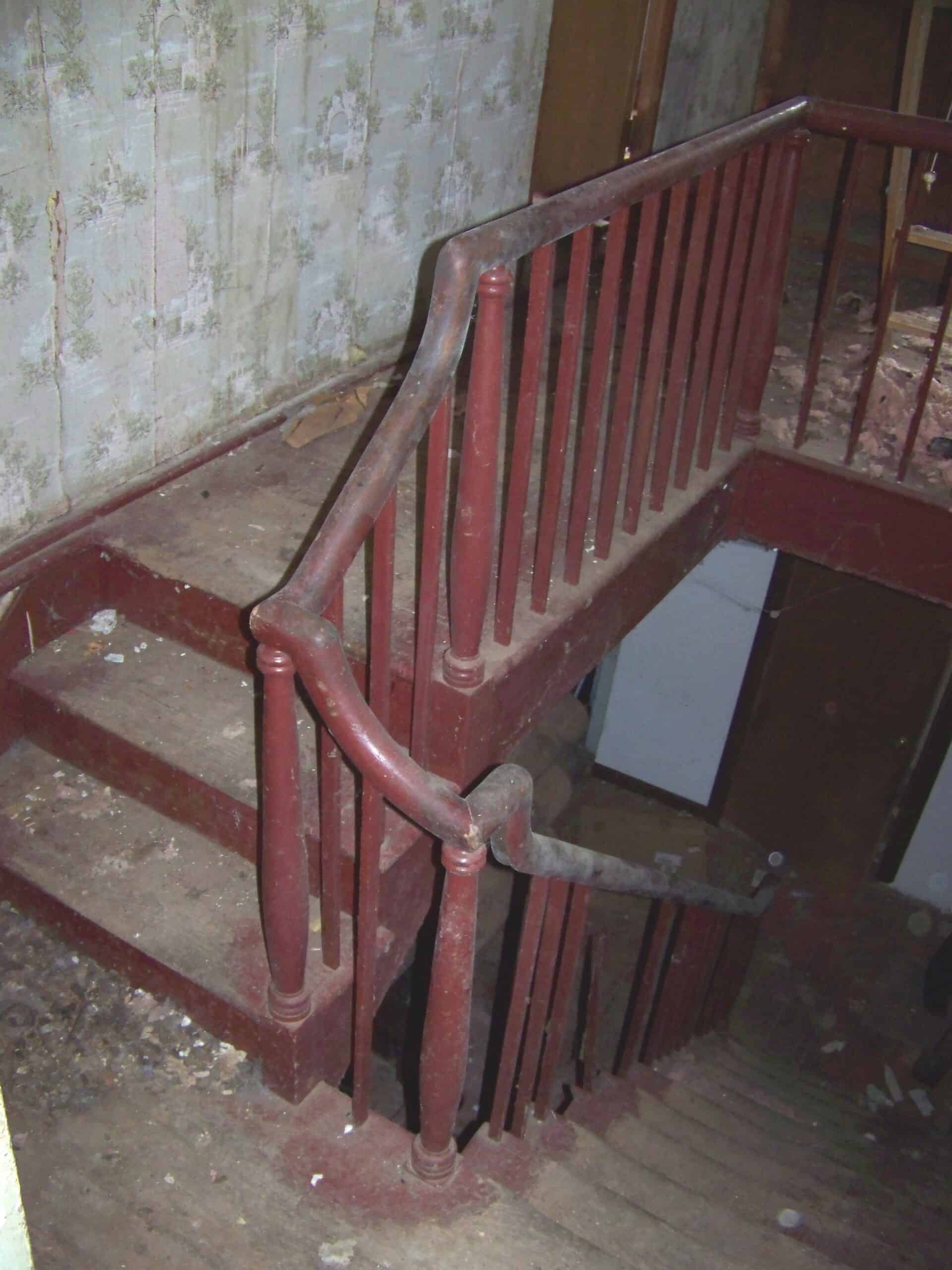
Staircase – David Nelson House
On the first floor the northern frame wing was one large room, probably a kitchen originally, with several small enclosures and its second floor was reached from a door on the hall landing, and divided into several rooms, which could not all be safely explored, but which had plank ceilings.
Changes had been made over the years: all the windows and the main cornice and roof had been replaced, the plaster and lath had been removed from the east room on the first floor, the front door removed and the opening sealed, a bathroom added on one side of the kitchen, and a large lean-to room added on the other side.
About the Author
Annette Lynch and Bill Moore are Crawford County Historical Society members as well as avid researchers and genealogists. Both have served on the Society’s Board of Directors and have volunteered for decades in various capacities at CCHS.
Sign Up for Our Newsletter
Get the latest Crawford County Historical Society news and information delivered right to your inbox.
"*" indicates required fields